
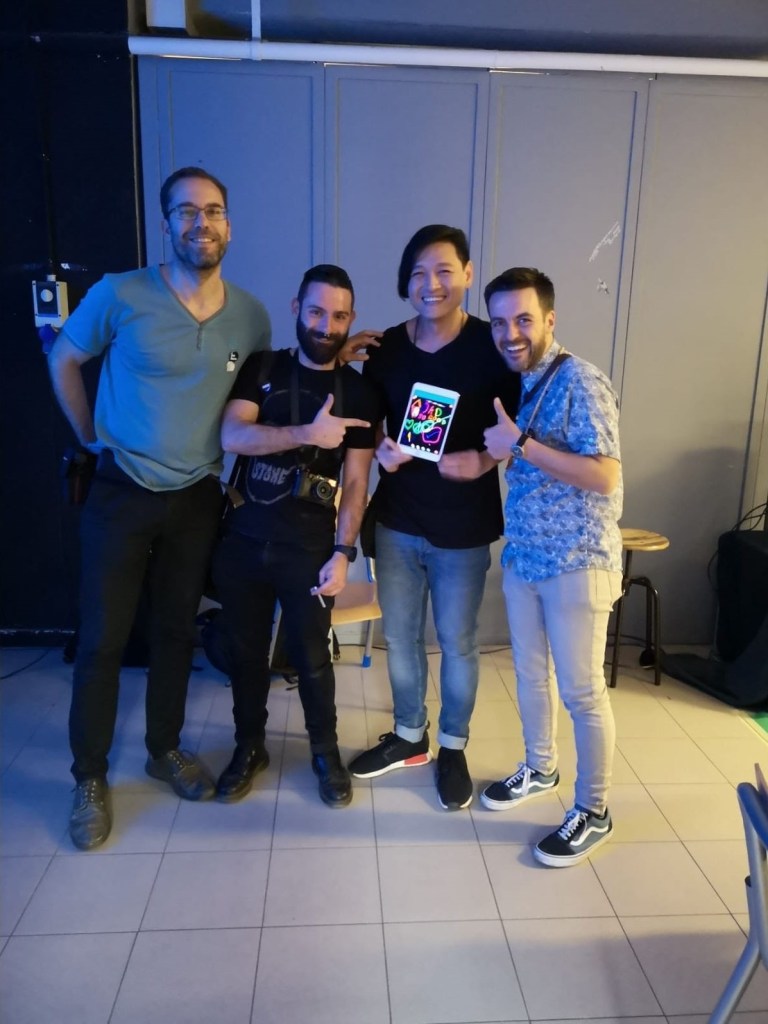
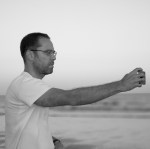
Hoy tengo el placer de publicar la entrevista a un grande de la fotografía de calle actual, el tailandés Tavepong. Le conocí personalmente en 2018 cuando, junto con otros dos miembros de LCEN, los fundadores de la misma, David y Raúl, viajamos a Roma para asistir a la primera edición del Italian Street Photo Festival. Allí tuvimos el placer de escuchar su charla, conocerle a él y su forma de trabajar. Prueba de ese encuentro es la foto que nos hicimos con él al final de la charla.
Tavepong no es sólo un grandísimo fotógrafo de calle sino, además, una persona extremadamente amable y accesible que no dudó en decir “sí” cuando le ofrecí hacer esta entrevista. Debo decir que esta accesibilidad no la he encontrado en otras figuras relevantes del panorama actual de la fotografía de calle a las que me he dirigido para ofrecerles una entrevista para nuestra web, por lo que públicamente quiero darle las gracias por haber accedido ya que, a pesar de ser una persona extremadamente ocupada, ha conseguido encontrar un hueco entre viaje y viaje, entre ciudad y ciudad, para responder a las preguntas que aquí publicamos. Muchas gracias, Tavepong, si mi admiración por ti ya era enorme antes de la entrevista, después de ella, es aún mayor.
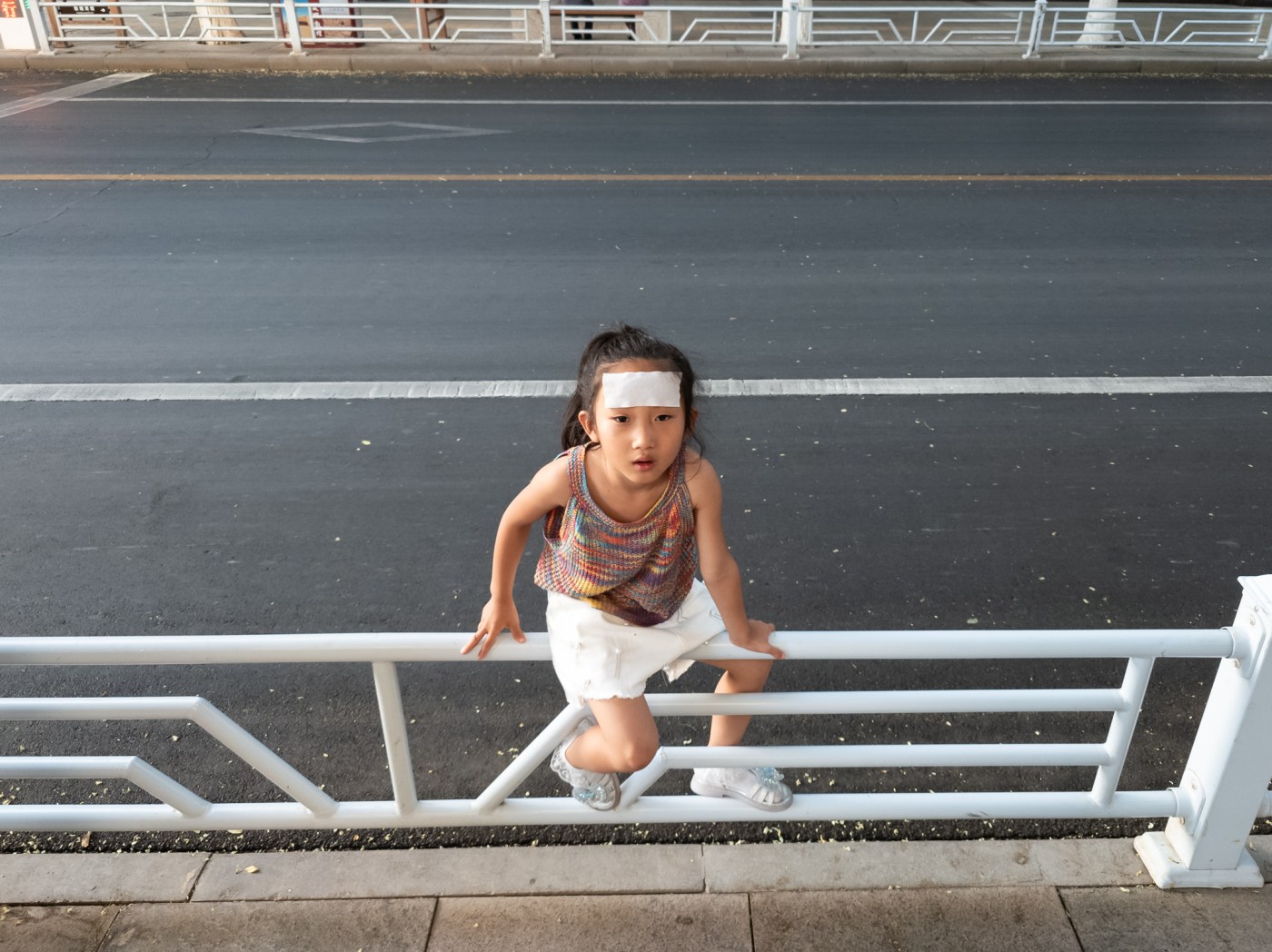
Mientras navegaba por Internet para preparar esta entrevista, me sorprendió encontrar relativamente poca información sobre ti. Por esa razón, me gustaría saber sobre tus antecedentes como fotógrafo y cómo comenzaste en la fotografía callejera.
La respuesta a esta pregunta se puede encontrar en la sección “About” de mi web, www.tavepong.com .
Nací en Chanthaburi, Tailandia, en 1981. Me interesé por el arte de la fotografía mientras estudiaba en la universidad, y ese interés fue creciendo gradualmente hasta convertirse en una pasión profunda.
Con el tiempo, sin embargo, me obsesioné un poco con el equipo fotográfico. Me convertí en lo que podrías llamar un “maniático del equipo”, centrándome más en las herramientas que en crear imágenes. Finalmente, casi dejé de fotografiar por completo.
Todo cambió a finales de 2013, cuando mi esposa me sorprendió con un regalo de aniversario de bodas: un billete a Varanasi, India. Ese billete —ese viaje— se convirtió en un verdadero punto de inflexión en mi vida. La intensidad de la vida en las calles de Varanasi reavivó mi pasión por la fotografía y me hizo volver a enamorarme de fotografiar la calle.
Después de regresar a Tailandia, me uní al proyecto Street Photo Thailand “365 Days in 2014”, creado por Noppadol Weerakitti. El proyecto animaba a los participantes a salir y tomar fotografías todos los días. Esa disciplina me marcó profundamente. Desde entonces, salir a fotografiar la vida cotidiana se ha convertido en parte de quien soy.
Sin embargo, tuve que pausar el proyecto diario durante la pandemia de COVID-19, cuando las restricciones nos impedían salir. Como muchos fotógrafos de calle, me vi obligado a detenerme, pero la mentalidad y la disciplina de esos años han permanecido conmigo desde entonces.
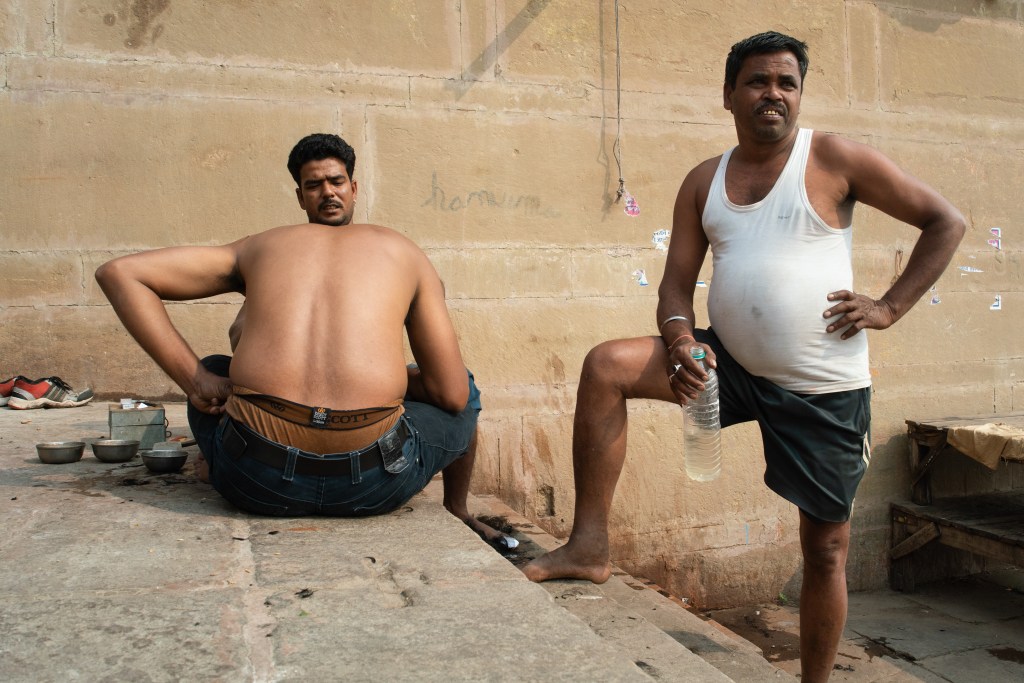
¿Cómo influyó en tu trabajo como fotógrafo de calle ese viaje de 2013 a Varanasi, India?
Tuvo un impacto enorme en mí.
Ese viaje fue la primera vez que viajaba solo al extranjero. Tiene gracia cuando lo pienso: fue un regalo de aniversario de bodas de mi esposa, ¡pero me envió solo! (risas)
Mirando atrás, tuve mucha suerte de que eligiera Varanasi. La ciudad es sorprendentemente fácil de recorrer. Simplemente me despertaba temprano cada día y caminaba de un lado a otro por los ghats del río Ganges. No tienes que pensar demasiado en direcciones. Simplemente caminas, observas y permaneces presente.
En comparación con muchas otras ciudades de la India, las escenas junto al río en Varanasi son visualmente más limpias y organizadas. Esa simplicidad me ayudó a centrarme en la composición, la luz y el momento, sin sentirme abrumado. Se convirtió en el entorno perfecto para entrenarme en la fotografía de calle.
Durante ese viaje no sólo tomaba fotos, estaba aprendiendo a ver. Fue allí donde realmente comencé a entender cómo observar la vida en la calle con paciencia e intención. En muchos sentidos, ese viaje sentó las bases de la forma en que trabajo hoy.
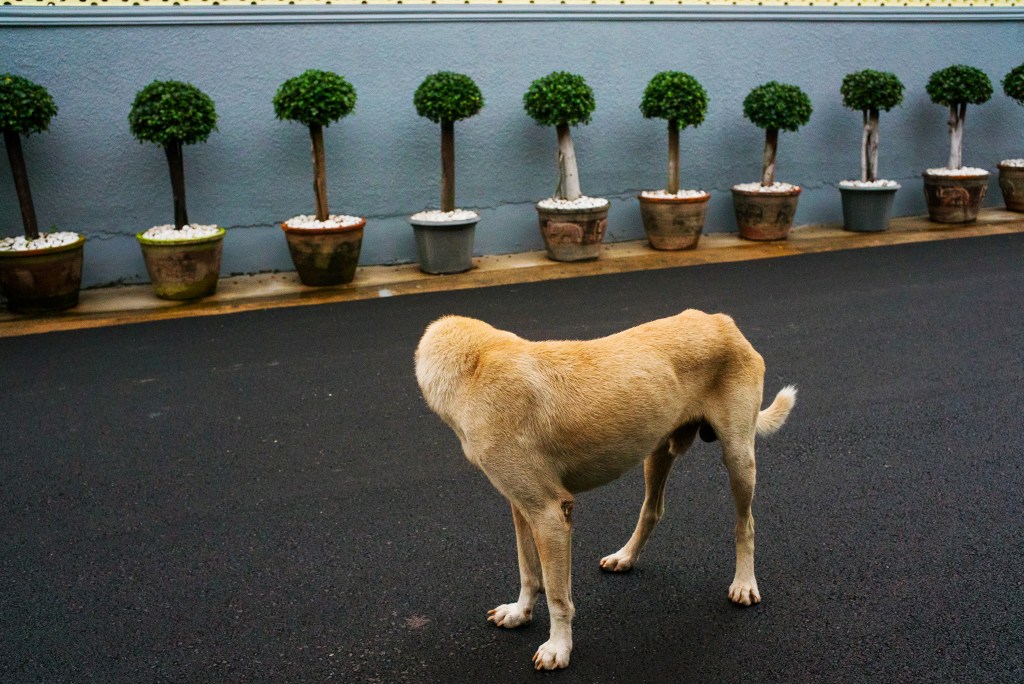
¿Cómo definirías la “fotografía de calle”?
Para mí, la fotografía de calle es la fotografía realizada en espacios públicos, sin escenificar ni dirigir ninguna escena, y guiada por la creatividad.
Se trata de observar la vida real tal como se desarrolla de manera natural, y encontrar momentos significativos o sorprendentes dentro de situaciones ordinarias. Nada está organizado, nada está forzado. Todo sucede frente a ti; tu trabajo es simplemente estar presente, atento y preparado.
Al mismo tiempo, la fotografía de calle no es solo documentar la realidad, también es interpretar esa realidad a través de tu propia visión, tu sentido del momento y tu imaginación.
¿Qué expectativas tienes cuando sales a tomar fotos?
Cuando salgo a fotografiar, mi principal deseo es simple: volver con al menos una imagen que realmente ame.
Idealmente, quiero que esa imagen sea algo que nunca haya tomado antes, o algo que no haya sido visto de la misma manera por otros. Siempre estoy buscando una nueva perspectiva, una nueva sensación, o una nueva combinación de elementos.
Por supuesto, sé muy bien que conseguir una buena fotografía todos los días es extremadamente difícil. Las imágenes verdaderamente fuertes son raras. A veces, una fotografía significativa puede tardar semanas, meses o incluso más en concretarse.
Por eso intento no presionarme demasiado. Me centro en ser constante, mantener la curiosidad y confiar en que, con el tiempo, el momento adecuado aparecerá.
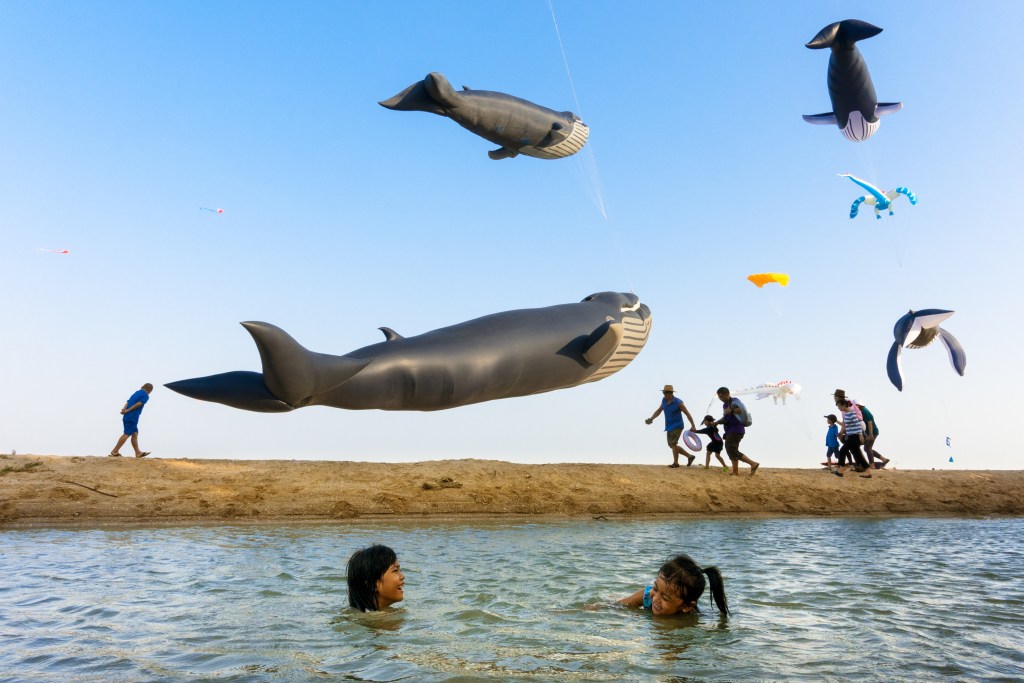
Si es posible, ¿podrías contarme cómo logras ese momento perfecto en tus fotografías? ¿Es suerte, el resultado de pasar muchas horas caminando por la calle, o un talento natural para ver lo que otros no ven?
Por supuesto, la suerte juega un papel muy importante en este tipo de fotografía. No se puede negar. Muchos grandes momentos ocurren solo una vez, y no tienes control sobre ellos.
Sin embargo, creo firmemente que cuanto más sales a fotografiar, más oportunidades creas para que la suerte ocurra. La suerte favorece a quienes están presentes, son pacientes y perseverantes.
Personalmente, no creo realmente en el “talento natural”. Creo que lo que hago puede aprenderlo cualquiera. Se trata principalmente de entrenar la mirada, aprender a observar y repetir el proceso una y otra vez.
Gran parte de esta mentalidad proviene de mis primeros años, especialmente cuando fotografiaba todos los días, casi de forma obsesiva. Durante ese tiempo estaba practicando constantemente: viendo, reaccionando, cometiendo errores y mejorando. Ese período moldeó mi capacidad para reconocer momentos de forma rápida e intuitiva.
Al final, lo que parece “momento perfecto” suele ser el resultado de disciplina a largo plazo, experiencia y muchas horas en la calle.
Para capturar ese tipo de “coincidencias” en tus fotos, imagino que la paciencia juega un papel importante. Cuando la toma no ocurre… ¿cuándo crees que es momento de dejar de buscar? ¿Alguna vez has encontrado otra “coincidencia” mientras esperabas que sucediera algo más?
Sí, la paciencia es muy importante. Muchas veces espero hasta que me empieza a doler la espalda (risas). Ese suele ser el momento en que decido moverme y fotografiar otra cosa.
Sin embargo, cuando encuentro un lugar o una escena que parece prometedora, normalmente tomo nota de la hora y el sitio. Si es posible, regreso más tarde —tal vez otro día, o incluso meses después—. La fotografía de calle no consiste sólo en esperar en el momento, sino también en volver al escenario adecuado cuando las condiciones parecen propicias.
En cuanto a encontrar una “coincidencia” inesperada mientras esperaba otra cosa, sí, eso ocurre con bastante frecuencia.
Un ejemplo es una fotografía que tomé en Marruecos. Estaba esperando una escena en la que una gaviota abriera las alas detrás de un gato. Mi idea era simple y un poco lúdica: quería crear la ilusión de un gato con alas. Esperé ese momento exacto.
Pero, en lugar de eso, ocurrió algo completamente diferente: una gaviota intentó robarle un pez al gato. La escena se volvió mucho más dinámica e inesperada de lo que había imaginado originalmente. Esa fotografía no fue el resultado que había planeado, pero terminó siendo más fuerte que mi idea inicial.
A veces, aquello que estás esperando nunca sucede —pero ocurre algo mejor.
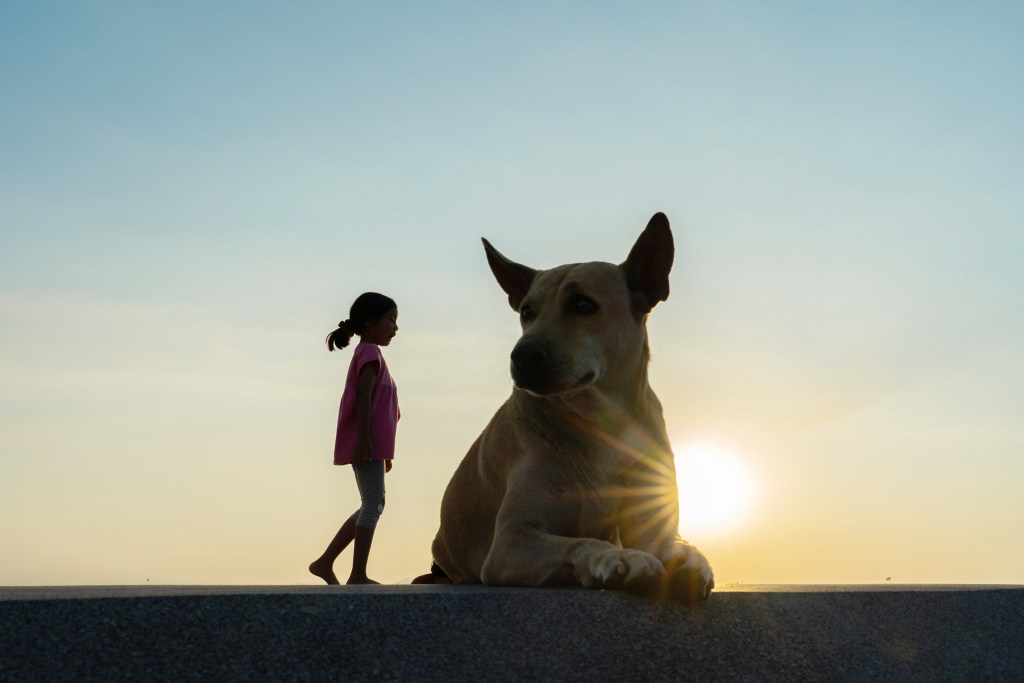
¿Qué te llevó a la calle en lugar de a otras disciplinas fotográficas? O dicho de otra manera, ¿qué encuentras en la calle que otros tipos de fotografía no te ofrecen?
Elegí la fotografía de calle porque cada vez que salgo a fotografiar, nunca sé qué tipo de imagen traeré de vuelta.
En otros géneros suele haber algo predecible. Por ejemplo, en la fotografía de paisaje sales a fotografiar una montaña o un lugar específico. La luz y los colores pueden cambiar, pero al final sigue siendo la misma montaña.
En la fotografía de retrato, fotografías a una persona concreta. El ángulo, la expresión o el estado de ánimo pueden variar, pero sigue siendo el mismo sujeto.
En la fotografía de calle, en cambio, nada está garantizado. No sabes quién aparecerá frente a tu lente. No sabes qué sucederá. No sabes qué tipo de historia se desarrollará.
Esa incertidumbre es lo que la hace tan atractiva para mí. Está llena de sorpresas, energía y emoción. Cada día en la calle es diferente, y cada fotografía es un nuevo descubrimiento.
Esa sensación de imprevisibilidad es el verdadero encanto y la alegría de la fotografía de calle.
¿Hay alguna ciudad que te inspire especialmente? ¿Y hay alguna ciudad o calle que te gustaría fotografiar y que aún no hayas visitado?
Creo que Varanasi es muy especial. Es un lugar increíble para cualquiera que quiera empezar a practicar la fotografía de calle y comenzar a viajar solo. La ciudad es intensa, emocional y llena de vida, pero al mismo tiempo es relativamente fácil de explorar. Permite a los principiantes centrarse en mirar y aprender sin sentirse demasiado abrumados.
Estambul también es una ciudad increíble para la fotografía callejera. La luz es hermosa, el clima es agradable y la gente es muy acogedora. En comparación con Varanasi, Estambul ofrece muchos más barrios pequeños y lugares escondidos por explorar, lo que la hace emocionante incluso después de múltiples visitas.
En cuanto a un lugar que me encantaría fotografiar pero que aún no he visitado, Cuba está muy arriba en mi lista. Su cultura, sus colores y su vida en la calle me resultan muy inspiradores. Y, sinceramente, creo que probablemente tendré la oportunidad de ir allí muy pronto.
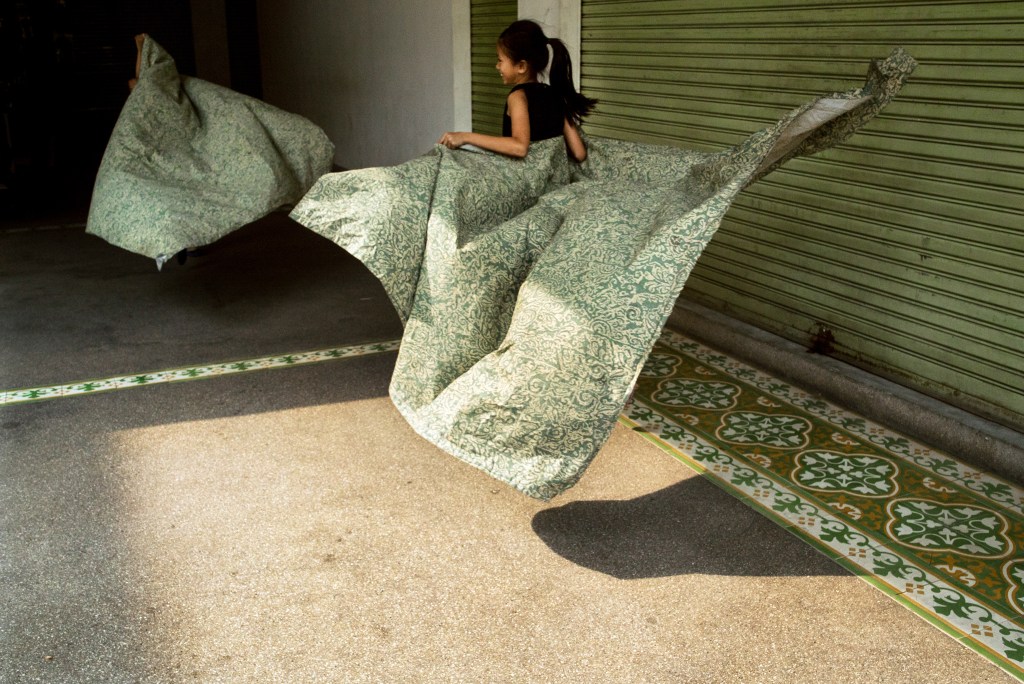
¿Qué fotografía aún no has tomado, pero te encantaría tomar?
Es una pregunta muy difícil.
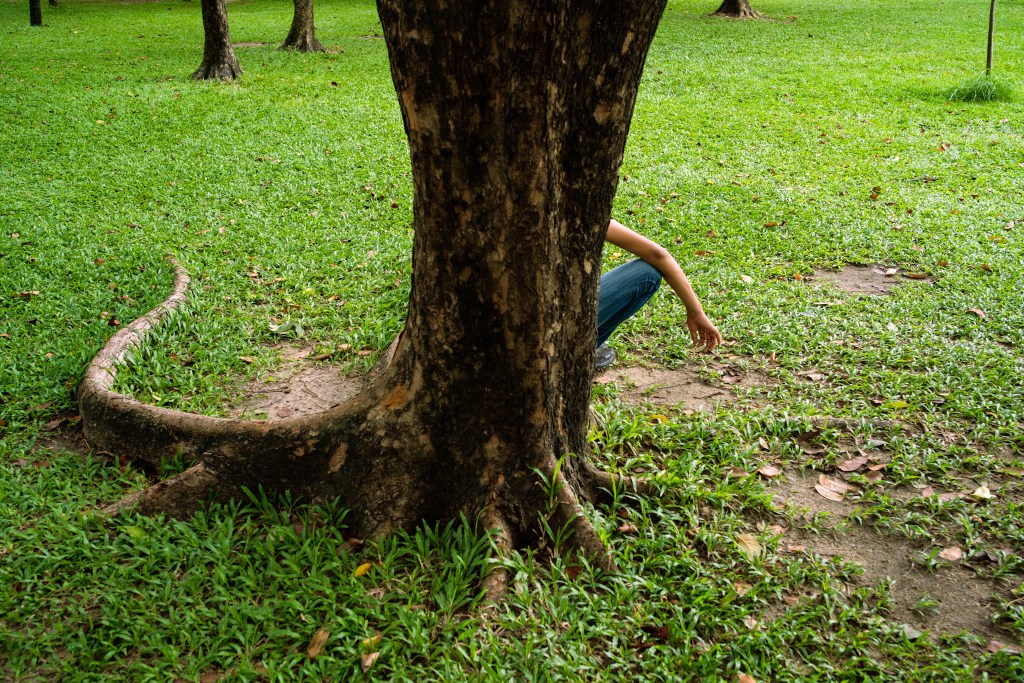
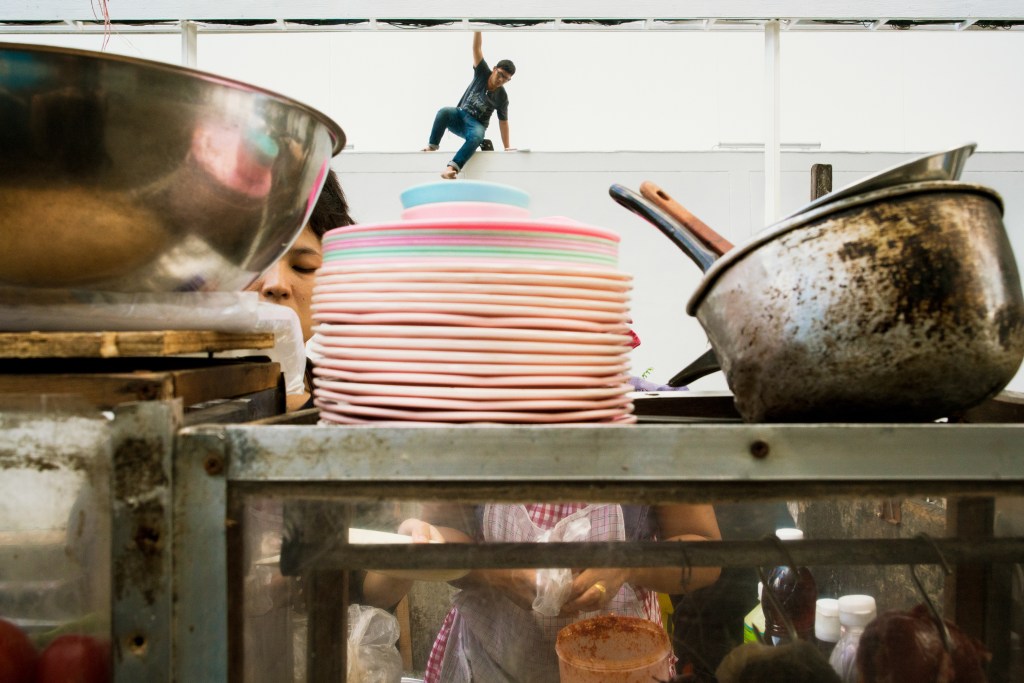
Si tuviera que elegir, diría que sueño con crear una fotografía que combine verdaderamente una fuerte superposición de planos (layering) y una potente yuxtaposición en una sola imagen.
¿Cuáles son tus referentes artísticos: fotógrafos, música, pintura, cine… cualquier cosa que te inspire?
En cuanto a fotógrafos, dos nombres que me han inspirado profundamente son Elliott Erwitt y Alex Webb.
Admiro a Elliott Erwitt por su sentido del humor, su sencillez y su capacidad para capturar momentos poéticos en la vida cotidiana. Sus fotografías son inteligentes, pero nunca complicadas; parecen espontáneas, pero están llenas de significado.
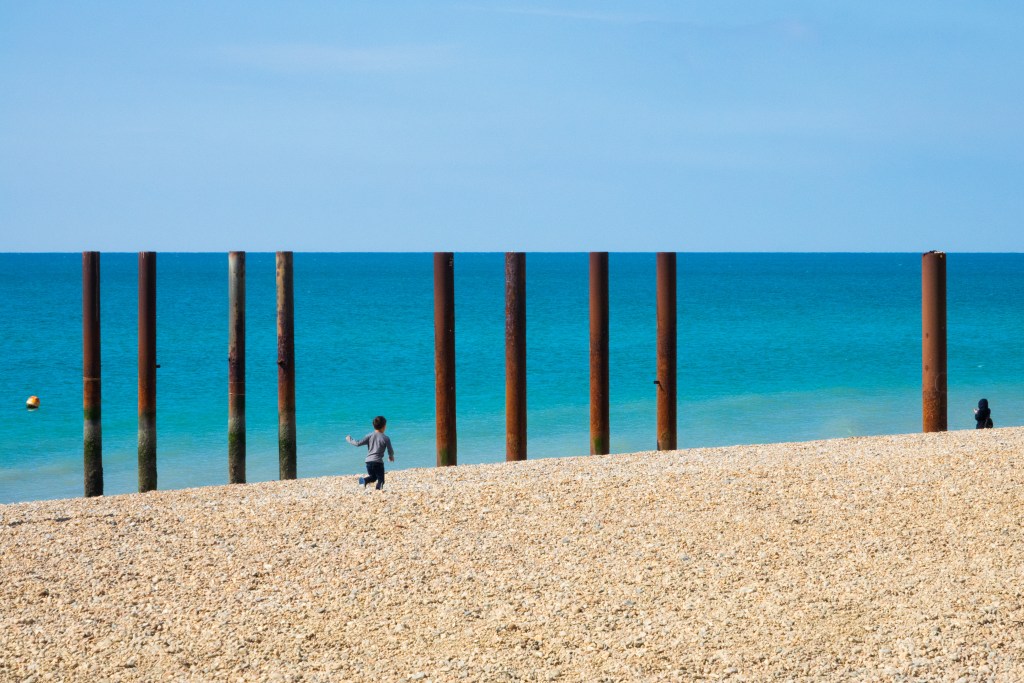
Alex Webb me inspira de una manera diferente. Su uso de la superposición de planos, el color y las composiciones complejas ha influido en la forma en que pienso la profundidad y la estructura en mis propias imágenes.
En cuanto a otras formas de arte —música, pintura, cine— mis gustos son bastante diversos. No tengo una referencia específica. Encuentro inspiración en todas partes. A veces proviene de una escena de una película, otras de una canción o incluso de la vida cotidiana. Intento mantenerme abierto y dejar que distintas influencias moldeen mi visión de forma natural.
¿Cómo ves el futuro de la fotografía de calle, y cuál es tu opinión sobre las redes sociales y la abrumadora cantidad de imágenes que se consumen cada día?
Creo que seguiremos viendo cada vez más trabajo de las generaciones más jóvenes de fotógrafos de calle. Eso es algo muy positivo para la comunidad.
Al mismo tiempo, probablemente veremos más imágenes que se parezcan a otras que ya hemos visto antes. Es algo natural. Todo fotógrafo tiene que pasar por una fase de experimentar, imitar y repetir aquello que admira. Forma parte del proceso de aprendizaje.
Al principio, muchas personas aprenden copiando —consciente o inconscientemente— los estilos e ideas de fotógrafos a los que respetan. No hay nada malo en ello. Les ayuda a comprender la composición, el momento y el lenguaje visual.
Mi esperanza es que, una vez que los fotógrafos jóvenes hayan pasado por este proceso y realmente comprendan cómo funcionan las cosas, comiencen a ir más allá de la imitación e intenten crear algo nuevo, algo personal, algo que no se haya hecho antes.
Si más fotógrafos son lo suficientemente valientes como para desarrollar su propia voz y visión, creo que será muy saludable para el futuro de la fotografía de calle, incluso en esta era de redes sociales e imágenes infinitas.
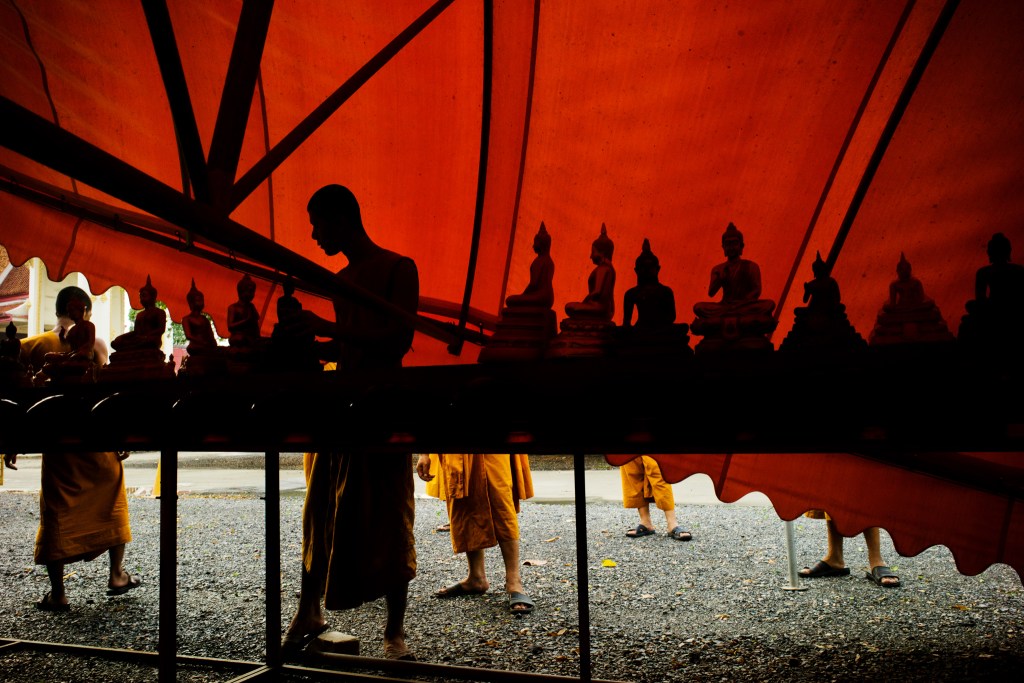
Has trabajado en colaboraciones con marcas de teléfonos móviles como Vivo, Oppo, Xiaomi y Sony (Sony Xperia 1 VII). ¿Crees que las fotos de calle tomadas con un teléfono móvil son tan válidas como las tomadas con cualquier otra cámara? ¿Ves ventajas en usar un móvil para la fotografía de calle?
Lo creas o no, mientras respondo esta pregunta estoy esperando mi vuelo de conexión hacia México para trabajar en un proyecto de fotografía móvil con Xiaomi. Así que este tema está muy presente en mi vida actual.
Para mí, el valor de una fotografía no depende realmente de si está tomada con una cámara o con un teléfono móvil. Una buena imagen es una buena imagen. La herramienta es secundaria.
(Aunque tengo que admitir que a veces me siento un poco triste cuando consigo una gran foto con el teléfono en lugar de con mi cámara principal —jaja.)
He trabajado con marcas como Vivo, Oppo, Xiaomi y Sony (Sony Xperia 1 VII), y estas experiencias me han demostrado lo potente que se ha vuelto la fotografía móvil.
Una gran ventaja de usar un teléfono móvil en la fotografía de calle es que las personas se sienten mucho más relajadas. Normalmente están menos nerviosas que cuando les apuntas con una cámara grande. Eso te ayuda a integrarte de forma más natural.
Otra gran ventaja es que tu teléfono siempre está contigo. Nunca pierdes un momento por no haber llevado la cámara.
Sin embargo, si quieres la mejor calidad posible, siempre recomiendo disparar en formato RAW. Te da mucha más flexibilidad y conserva más detalles para la edición posterior.
Al final, no se trata del dispositivo, sino de cómo ves el mundo y cómo cuentas tu historia a través de las imágenes.

Finalmente, aunque sé que es una pregunta común en entrevistas con alguien tan experimentado como tú, me interesa mucho tu opinión: ¿Qué consejo le darías a alguien que quiere empezar en la fotografía de calle?
Primero, intenta encontrar el enfoque o estilo que realmente te guste.
La fotografía de calle tiene muchas direcciones diferentes: superposición de planos, yuxtaposición, luz y sombra, fotografía con flash y muchas más. No existe una única forma “correcta”. Lo importante es descubrir qué es lo que conecta contigo.
Una vez que encuentres un estilo que te guste, sal a fotografiar tan a menudo como sea posible.
Luego regresa, edita tu trabajo y elige las imágenes que más te gusten. Pregúntate con honestidad: ¿Por qué me gusta esta foto? ¿Qué la hace especial para mí?
Después, vuelve a salir a fotografiar.
Repite este proceso una y otra vez —fotografiar, seleccionar, reflexionar y mejorar—. Ese ciclo es la forma en que creces.
Y lo más importante: nunca olvides disfrutar mientras estás en la calle. Si no sientes alegría en el proceso, será muy difícil mantener la motivación a largo plazo.
Para mí, amar el camino es tan importante como crear buenas fotografías.
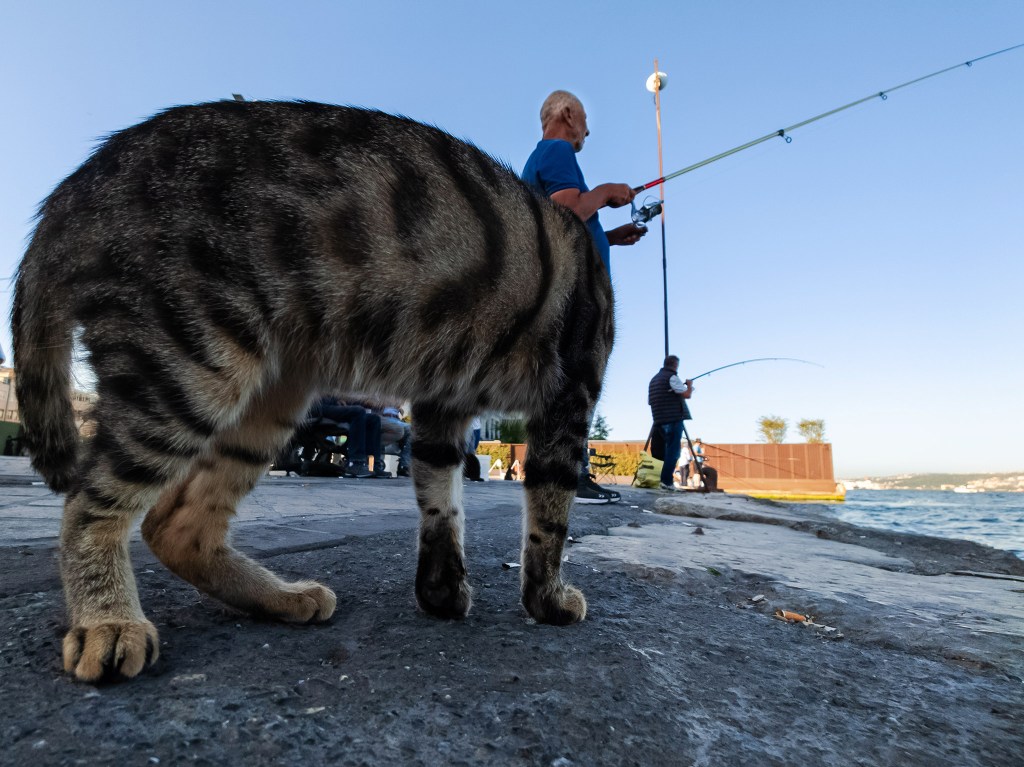
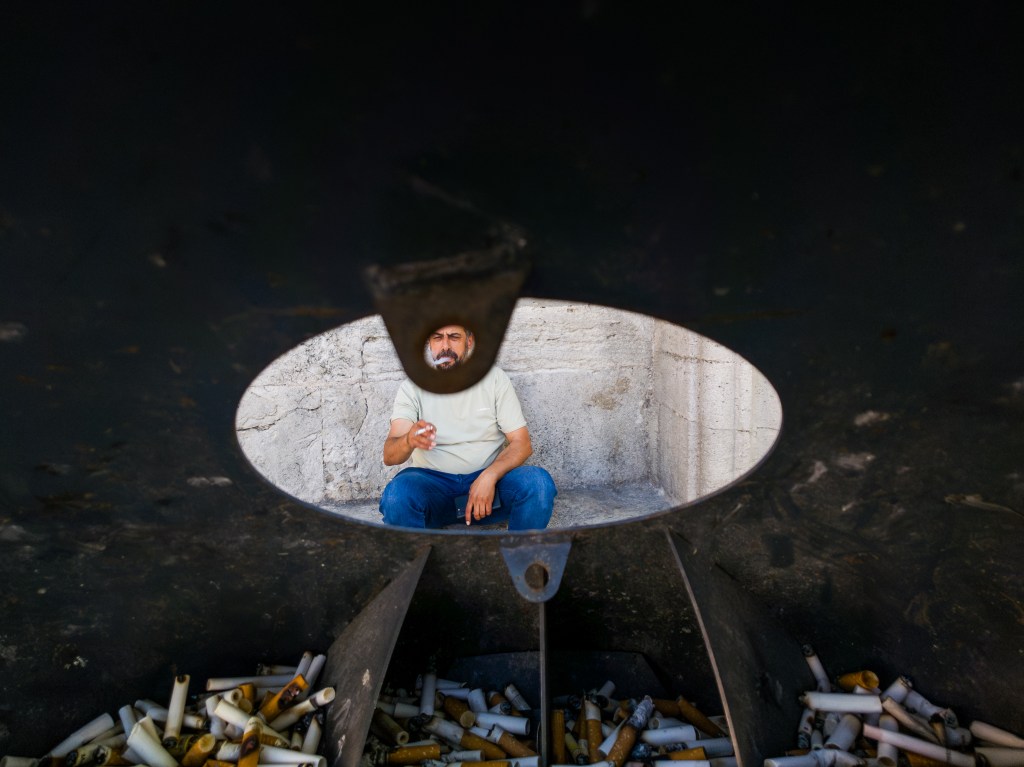
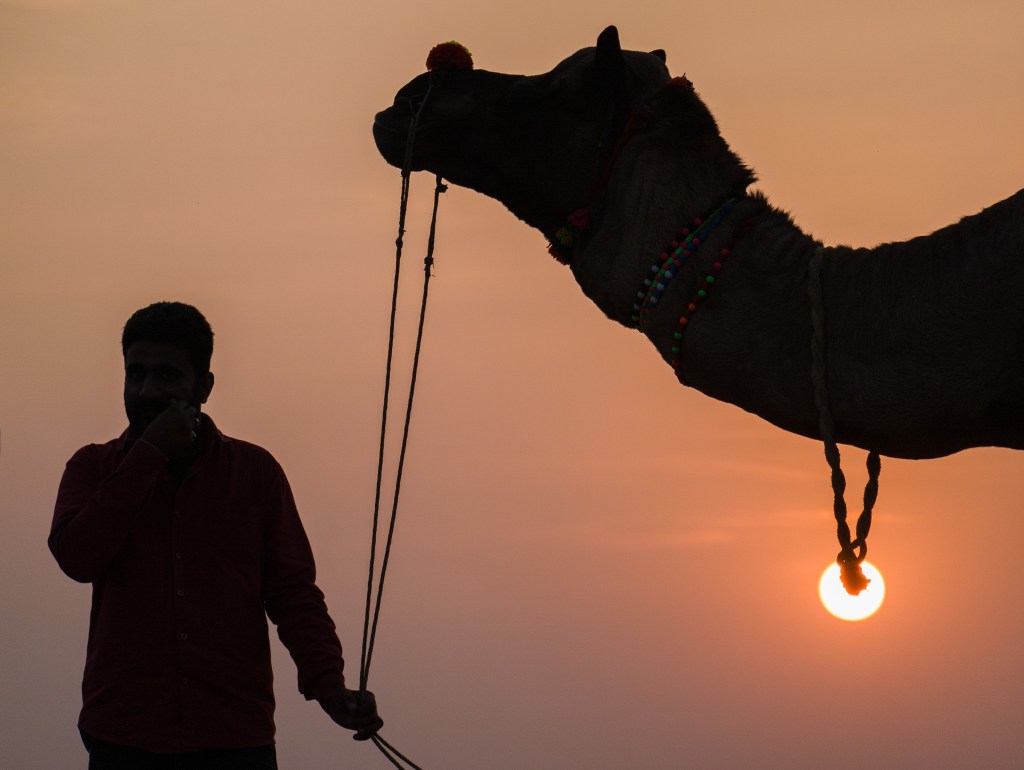
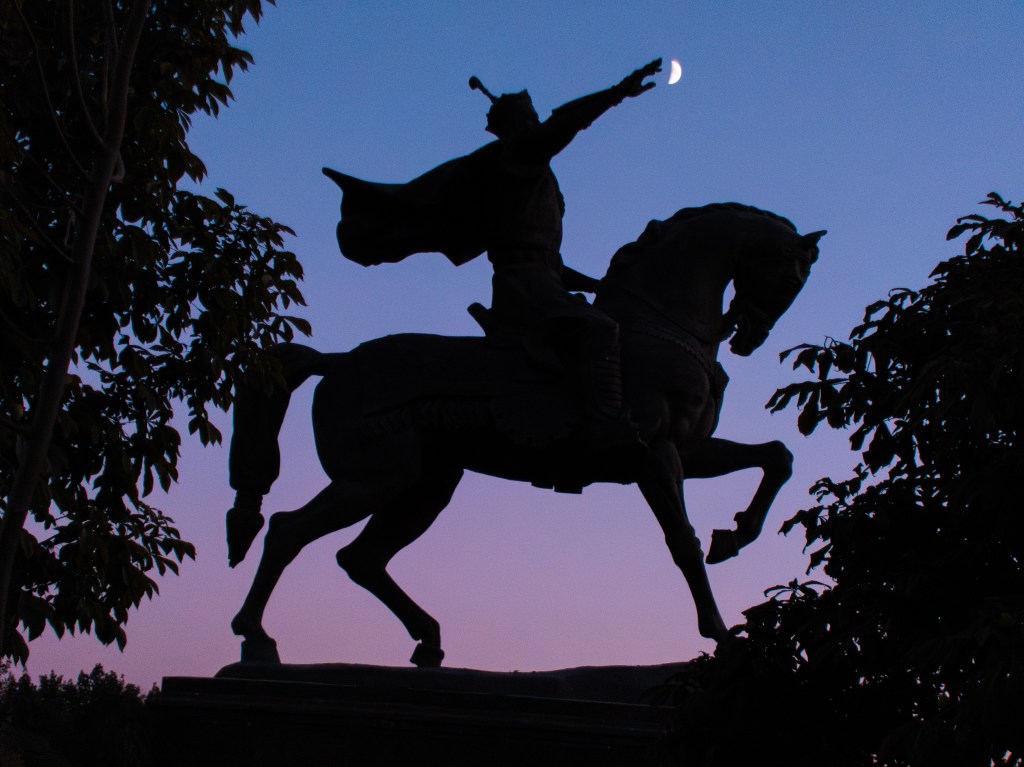
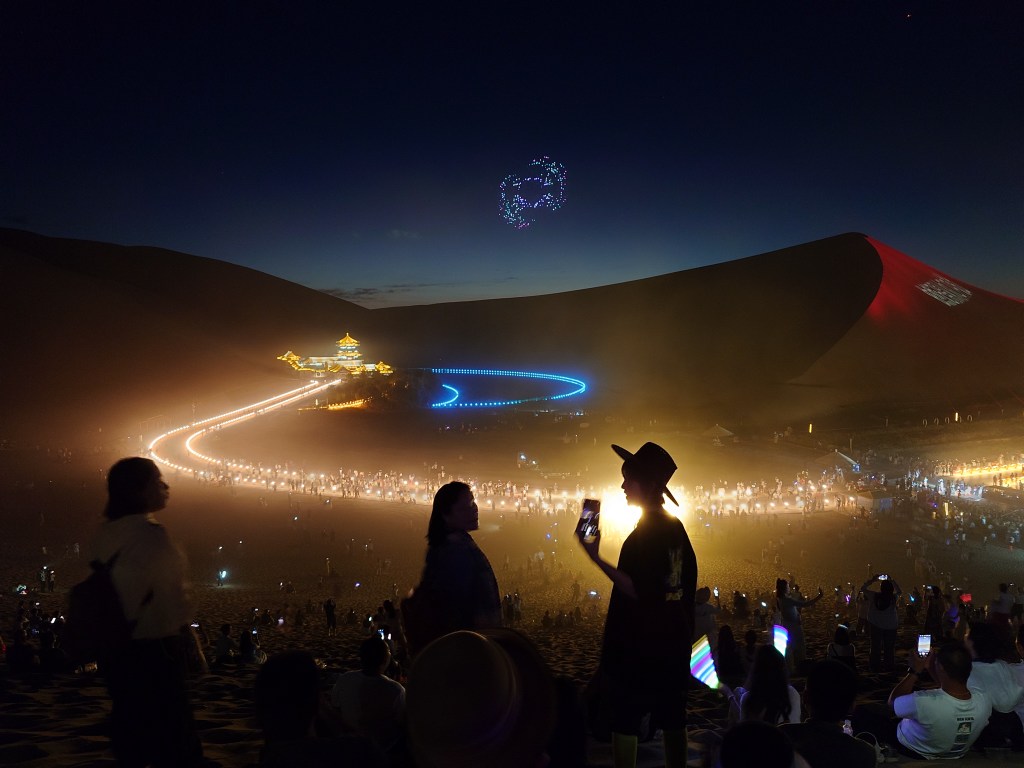
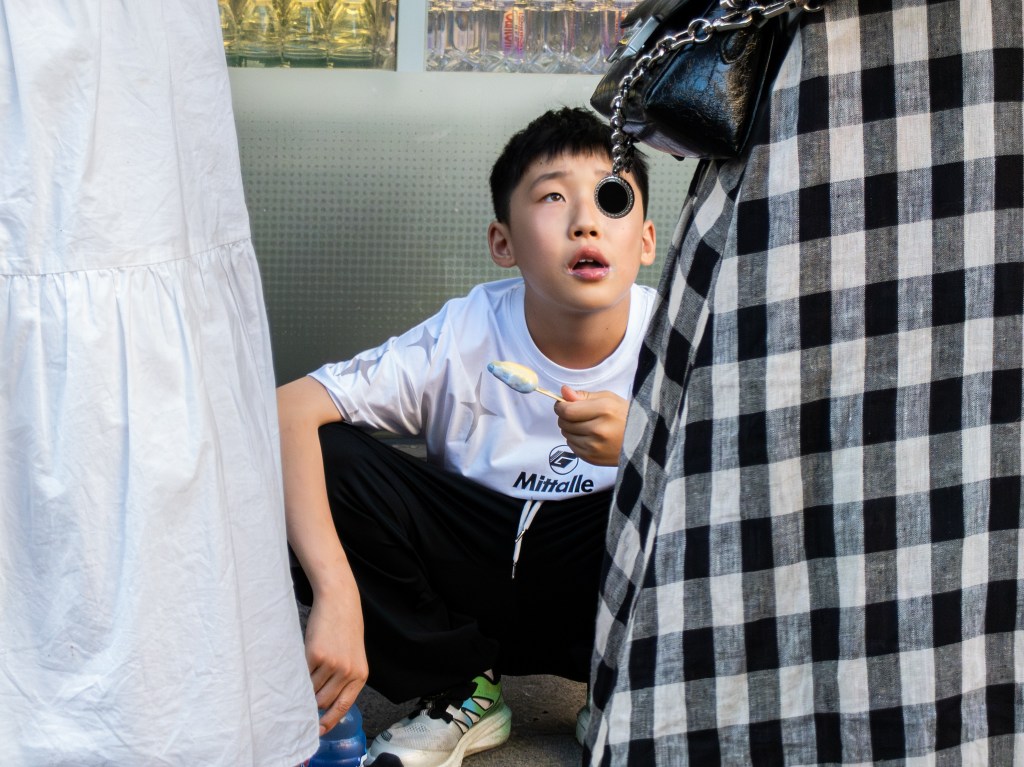
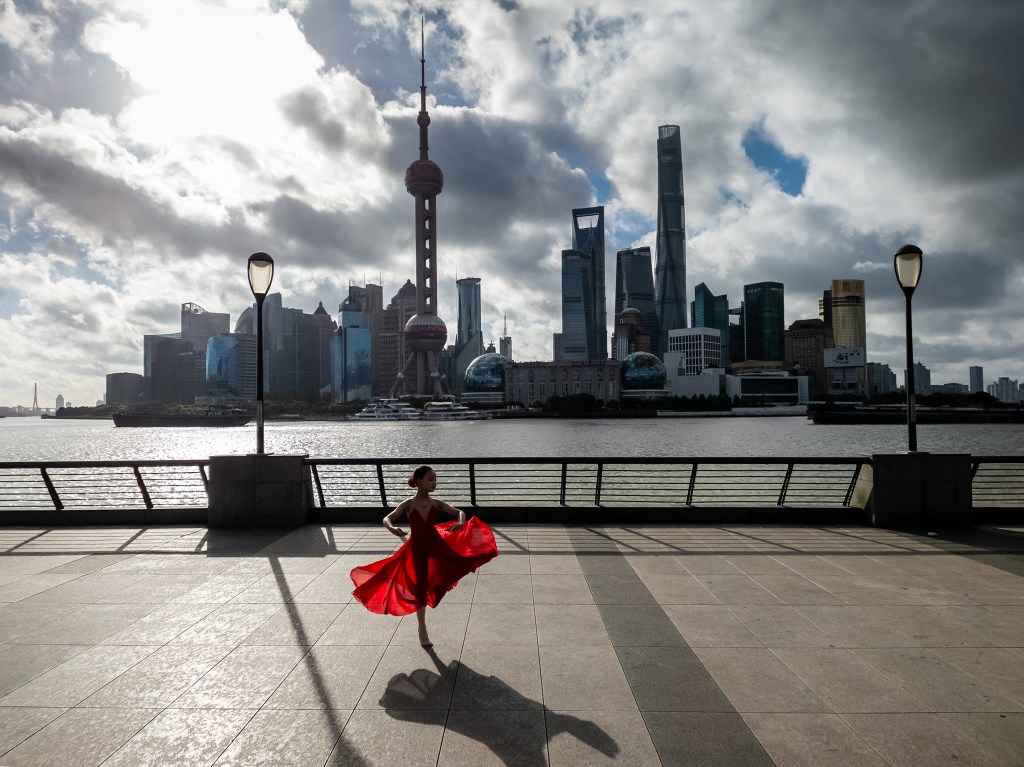
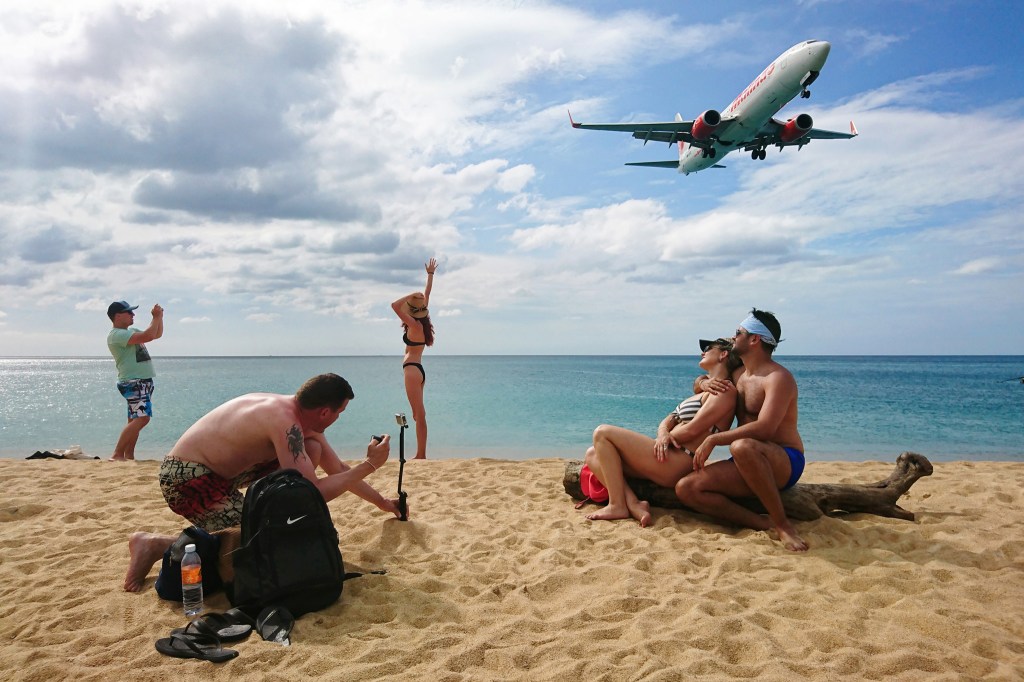
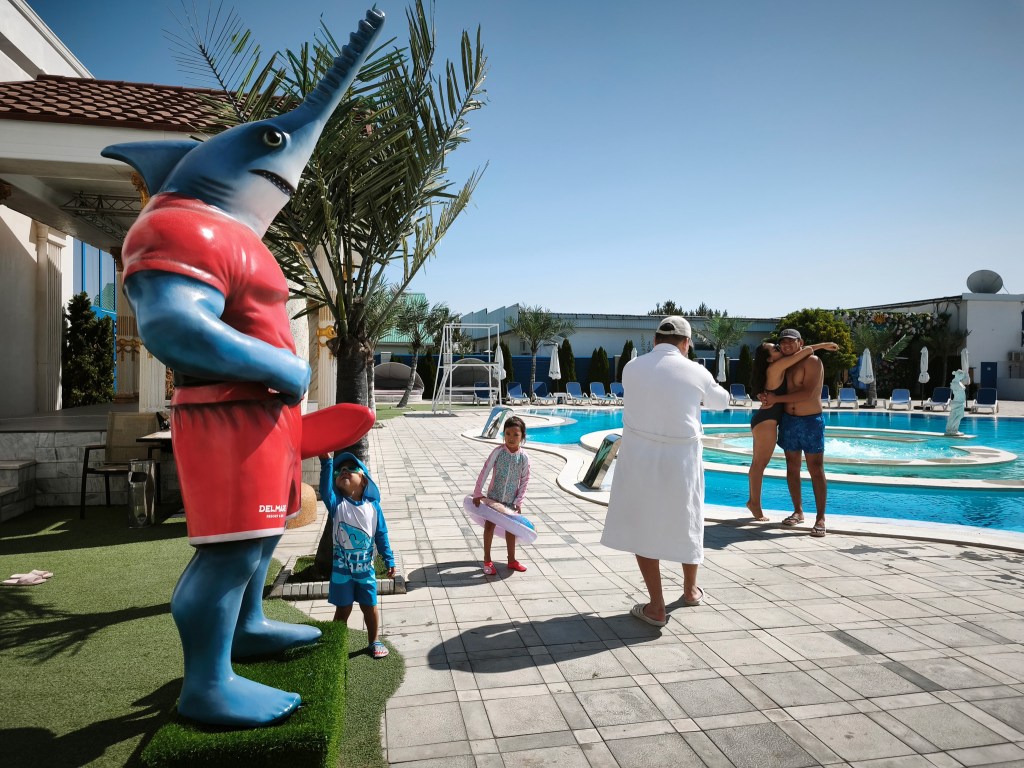
Today I have the pleasure of publishing the interview to one of the great contemporary street photographers, the Thai photographer Tavepong. I met him in person in 2018, when, together with two other members of LCEN—its founders, David and Raúl—we traveled to Rome to attend the first edition of the Italian Street Photo Festival. There, we had the pleasure of listening to his talk and getting to know both him and his way of working. Proof of that meeting is the photo we took with him at the end of the talk.
Tavepong is not only an outstanding street photographer but also an extremely kind and approachable person who did not hesitate to say “yes” when I invited him to take part in this interview. I must say that I have not found this same accessibility in other prominent figures in today’s street photography scene whom I approached about doing an interview for our website. Therefore, I would like to publicly thank him for agreeing to participate, as despite being an extremely busy person, he managed to find some time between trips, between cities, to answer the questions we publish here.
Thank you very much, Tavepong. If my admiration for you was already immense before the interview, it is even greater now.
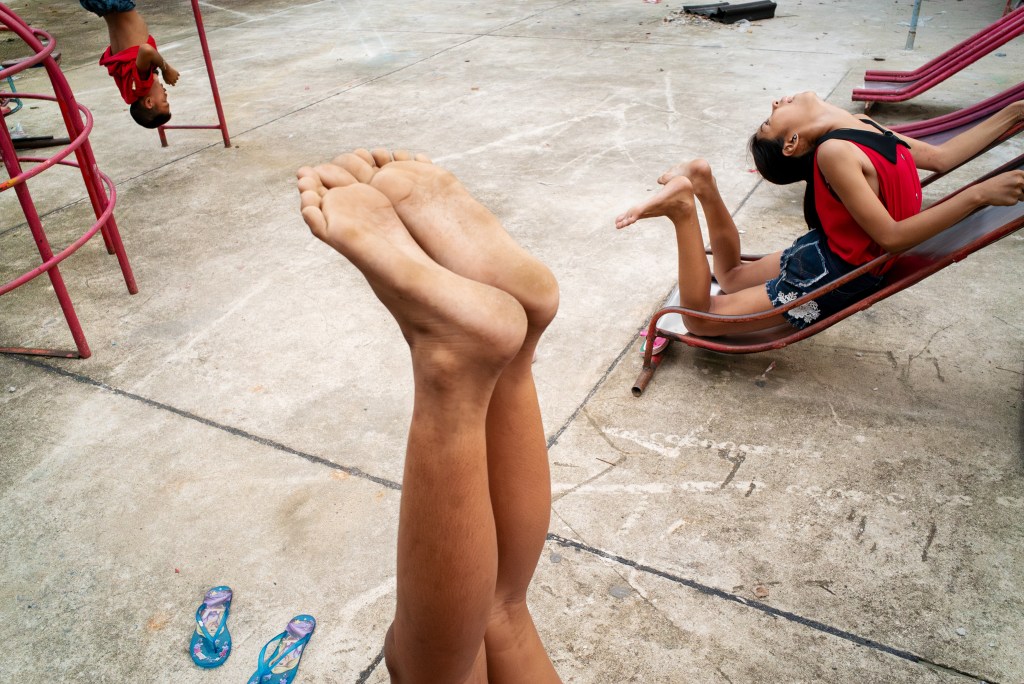
While browsing the Internet to prepare this interview, I was surprised to find relatively little information about you. For that reason, I’d like to know about your background as a photographer and how you first got into street photography.
The answer to this question can be found on the „About“ page of my website, http://www.tavepong.com .
I was born in Chanthaburi, Thailand, in 1981. I became interested in the art of photography while studying at Rangsit University, and that interest gradually grew into a deep passion.
Over time, however, I became somewhat obsessed with camera equipment. I turned into what you might call a “camera gear maniac,” focusing more on tools than on actually creating images. Eventually, I almost stopped shooting altogether.
Everything changed at the end of 2013, when my wife surprised me with a wedding anniversary gift: a ticket to Varanasi, India. That ticket — that trip — became a true turning point in my life. The intensity of life on the streets of Varanasi reignited my passion for photography and made me fall in love with photographing the street all over again.
After returning to Thailand, I joined the Street Photo Thailand project “365 Days in 2014,” created by Noppadol Weerakitti. The project encouraged participants to go out and take photographs every single day. That discipline shaped me profoundly. Since then, going out to photograph daily life has become part of who I am.
However, I had to pause the daily project during the COVID-19 pandemic, when restrictions prevented us from going outside. Like many street photographers, I was forced to stop — but the mindset and discipline from those years have stayed with me ever since.
How did that 2013 trip to Varanasi, India, influence your work as a street photographer?
It had a huge impact on me.
That trip was the first time I ever traveled alone abroad. It’s actually quite funny when I think about it — it was a wedding anniversary gift from my wife, but she sent me there alone! (laughs)
In hindsight, I was very lucky that she chose Varanasi. The city is surprisingly easy to navigate. Every day, I would simply wake up early and walk back and forth along the ghats of the Ganges River. You don’t really have to think too much about directions. You just walk, observe, and stay present.
Compared to many other cities in India, the riverside scenes in Varanasi are visually cleaner and more organized. That simplicity helped me focus on composition, light, and timing without being overwhelmed. It became the perfect environment for me to train myself in street photography.
During that trip, I wasn’t just taking photos — I was learning how to see. It was there that I truly began to understand how to observe life on the street with patience and intention. In many ways, that journey shaped the foundation of how I work today.
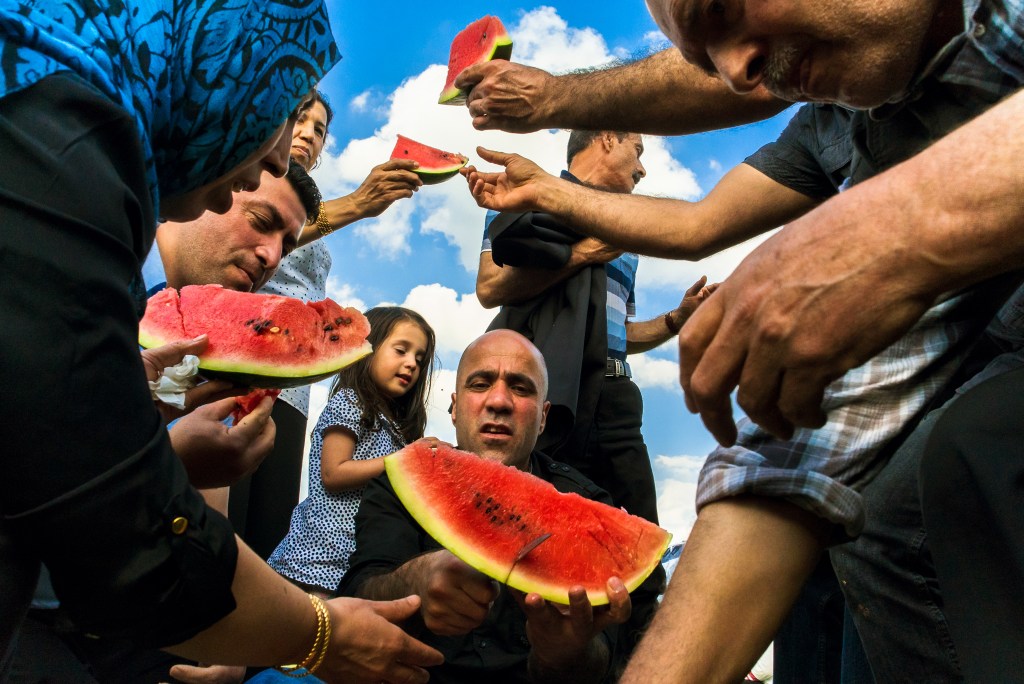
How would you define “street photography”?
For me, street photography is photography taken in public spaces, without staging or directing any scene, and driven by creativity.
It is about observing real life as it unfolds naturally, and finding meaningful or surprising moments within ordinary situations. Nothing is arranged, nothing is forced. Everything happens in front of you — your job is simply to be present, aware, and ready.
At the same time, street photography is not just about documenting reality. It is also about how you interpret that reality through your own vision, timing, and imagination.
What are your expectations when you go out to take photos?
When I go out to take photos, my main hope is simple: that I can come back with at least one image that I truly love.
Ideally, I want that image to be something I have never taken before — or something that hasn’t been seen in the same way by others. I am always searching for a new perspective, a new feeling, or a new combination of elements.
Of course, I know very well that getting a good photograph every single day is extremely difficult. Truly strong images are rare. Sometimes, one meaningful photograph can take weeks, months, or even longer to finally come together.
That is why I try not to put too much pressure on myself. I focus on being consistent, staying curious, and trusting that, with time, the right moment will eventually appear.
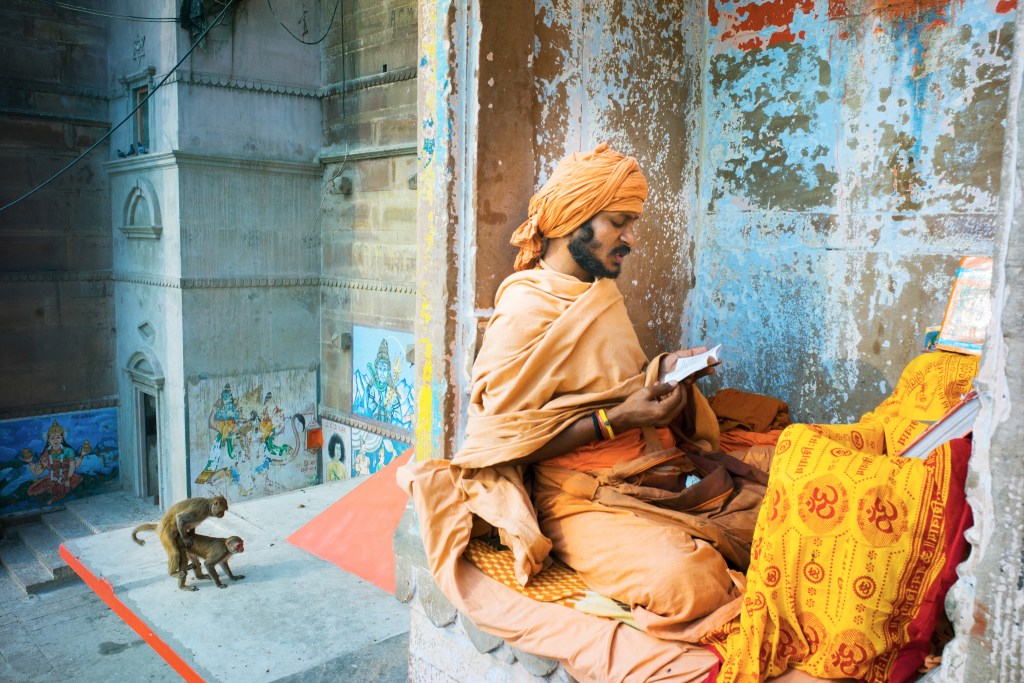
If possible, could you tell me how you manage to achieve that perfect timing in your photographs? Is it luck, the result of spending many hours walking the streets, or a natural talent for seeing what others don’t?
Of course, luck plays a very important role in this kind of photography. You cannot deny that. Many great moments happen only once, and you have no control over them.
However, I strongly believe that the more you go out and photograph, the more chances you create for luck to happen. Luck favors those who are present, patient, and persistent.
Personally, I don’t really believe in “natural talent.” I believe that what I do can be learned by anyone. It is mainly about training your eyes, learning how to observe, and repeating the process again and again.
A big part of this mindset comes from my early years, especially when I was shooting every single day almost obsessively. During that time, I was constantly practicing — seeing, reacting, making mistakes, and improving. That period shaped my ability to recognize moments quickly and intuitively.
In the end, what looks like “perfect timing” is usually the result of long-term discipline, experience, and countless hours on the street.
To capture those kinds of “coincidences” in your photos, I imagine patience plays an important role. When the shot doesn’t happen… when do you think it’s time to stop searching? Have you ever found another “coincidence” while waiting for something else to happen?
Yes, patience is very important. Many times, I wait until my back starts to hurt (laughs). That’s usually the moment I decide to move on and shoot something else.
However, when I find a location or a scene that feels promising, I usually take note of the time and the place. If possible, I come back later — maybe another day, or even months later. Street photography is not only about waiting in the moment, but also about returning to the right stage when the conditions feel right.
Regarding getting an unexpected “coincidence” while waiting for something else — yes, that happens quite often.
One example is a photograph I took in Morocco. I was waiting for a scene where a seagull would spread its wings behind a cat. My idea was simple and a bit playful: I wanted to create the illusion of a cat with wings. I waited for that exact moment.
But instead, something completely different happened — a seagull suddenly tried to steal a fish from the cat. The scene became much more dynamic and unexpected than what I had originally imagined. That photograph was not the result I planned, but it turned out to be stronger than my initial idea.
Sometimes, what you are waiting for never happens — but something better does.
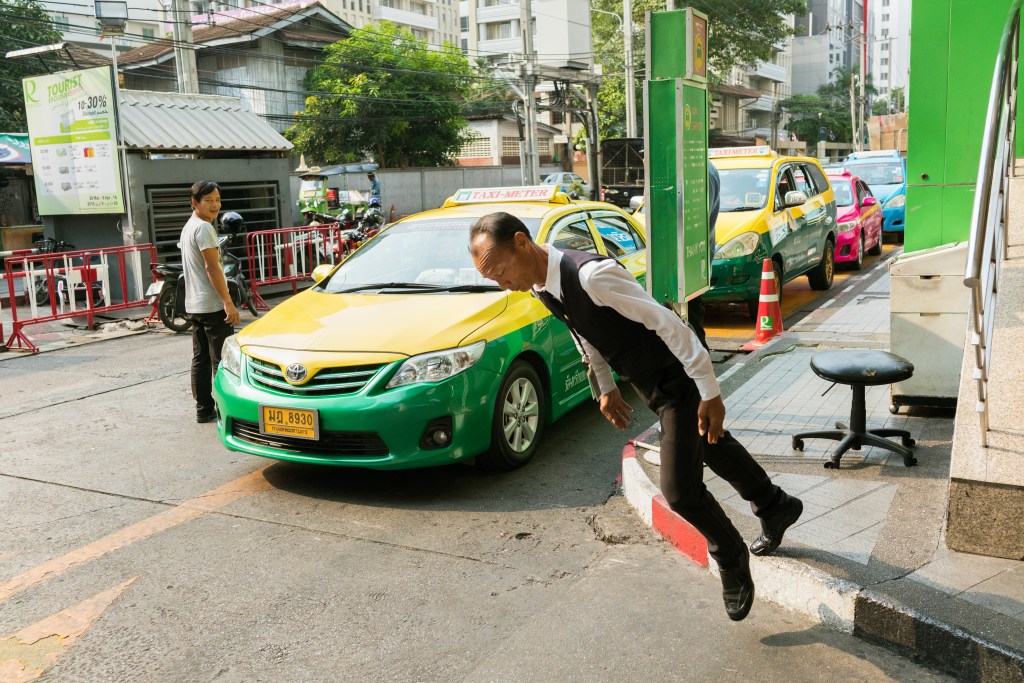
What led you to the street rather than other photographic disciplines? Or, put another way, what do you find in the street that other types of photography don’t give you?
I chose street photography because every time I go out to shoot, I never know what kind of photograph I will come back with.
With other genres, there is usually something predictable. For example, in landscape photography, you go out to photograph a specific mountain or location. The light and colors may change, but in the end, it is still that same mountain.
In portrait photography, you photograph a particular person. The angle, expression, or mood may vary, but it is still the same subject.
But in street photography, nothing is guaranteed. You don’t know who will appear in front of your lens. You don’t know what will happen. You don’t know what kind of story will unfold.
That uncertainty is what makes it so attractive to me. It is full of surprises, energy, and emotion. Every day on the street is different, and every photograph is a new discovery.
That sense of unpredictability is the real charm and joy of street photography.
Is there a city that particularly inspires you? And is there a city or street you’d like to photograph where you haven’t yet been?
I think Varanasi is very special. It is an amazing place for anyone who wants to start practicing street photography and begin traveling alone. The city is intense, emotional, and full of life, yet at the same time, it is relatively easy to explore. It allows beginners to focus on seeing and learning without being too overwhelmed.
Istanbul is also an incredible city for street photography. The light is beautiful, the weather is pleasant, and the people are very welcoming. Compared to Varanasi, Istanbul offers many more small neighborhoods and hidden locations to explore, which makes it exciting even after multiple visits.
As for a place I would love to photograph but haven’t visited yet, Cuba is high on my list. Its culture, colors, and street life are very inspiring to me. And honestly, I think I will probably get the chance to go there very soon.
What photograph have you not taken yet, but would love to take?
That is a very difficult question.
If I had to choose, I would say I dream of creating a photograph that truly combines strong layering and powerful juxtaposition in a single image.
Who are your artistic references: photographers, music, painting, cinema… anything that inspires you?
When it comes to photographers, two names that have deeply inspired me are Elliott Erwitt and Alex Webb.
I admire Elliott Erwitt for his sense of humor, simplicity, and his ability to capture poetic moments in everyday life. His photographs are intelligent but never complicated — they feel effortless, yet meaningful.
Alex Webb inspires me in a different way. His use of layering, color, and complex compositions has influenced how I think about depth and structure in my own images.
As for other art forms — music, painting, cinema — my tastes are quite diverse. I don’t have one specific reference. I find inspiration everywhere. Sometimes it comes from a movie scene, sometimes from a song, or even from ordinary daily life. I try to stay open and let different influences naturally shape my vision.
How do you see the future of street photography, and what is your opinion about social media and the overwhelming amount of images consumed every day?
I think we will continue to see more and more work from younger generations of street photographers. That is a very positive thing for the community.
At the same time, we will probably see more images that look similar to ones we have already seen before. This is natural. Every photographer has to go through a phase of experimenting, imitating, and repeating what they admire. It is part of the learning process.
In the beginning, many people learn by copying — consciously or unconsciously — the styles and ideas of photographers they respect. There is nothing wrong with that. It helps them understand composition, timing, and visual language.
My hope is that once young photographers have gone through this process and truly understand how things work, they will start to move beyond imitation and try to create something new — something personal, something that has not been done before.
If more photographers are brave enough to develop their own voice and vision, I believe it will be very healthy for the future of street photography, even in this era of social media and endless images.
You’ve worked on collaborations with mobile phone brands such as Vivo, Oppo, Xiaomi, and Sony (Sony Xperia 1 VII). Do you feel that street photos taken with a mobile phone are as valid as those taken with any other camera? Do you see any advantages in using a mobile phone for street photography?
Believe it or not, as I’m answering this question, I’m actually waiting for my connecting flight to Mexico to work on a mobile photography project with Xiaomi.
So this topic feels very close to my current life.
For me, the value of a photograph does not really depend on whether it is taken with a camera or a mobile phone. A good image is a good image. The tool is secondary.
(Although I have to admit, sometimes I feel a bit sad when I get a great photo with my phone instead of my main camera — haha.)
I’ve worked with brands like Vivo, Oppo, Xiaomi, and Sony (Sony Xperia 1 VII), and these experiences have shown me how powerful mobile photography has become.
One major advantage of using a mobile phone for street photography is that people feel much more relaxed. They are usually less nervous compared to when you point a big camera at them. It helps you blend in more naturally.
Another big advantage is that your phone is always with you. You never miss a moment just because you didn’t bring your camera.
However, if you want the best possible quality, I always recommend shooting in RAW format. It gives you much more flexibility and preserves more details for post-processing.
In the end, it’s not about the device — it’s about how you see the world and how you tell your story through images.
Finally, although I know it’s a common question in interviews with someone as experienced as you, I’m very interested in your opinion: what advice would you give to someone who wants to start out in street photography?
First, try to find the approach or style that you truly enjoy.
Street photography has many different directions — layering, juxtaposition, light and shadow, flash photography, and many more. There is no single “correct” way. What matters is discovering what resonates with you.
Once you find a style you like, go out and photograph as often as possible.
Then, come back, edit your work, and choose the images you love the most. Ask yourself honestly: Why do I like this photo? What makes it special to me?
After that, go out and shoot again.
Repeat this process over and over — shooting, selecting, reflecting, and improving. This loop is how you grow.
And most importantly, never forget to enjoy yourself while you are on the street.
If you don’t feel joy in the process, it will be very difficult to stay motivated in the long run.
For me, loving the journey is just as important as creating good photographs.



 La Calle es Nuestra
Deja un comentario